Training, seminar and networking programmes
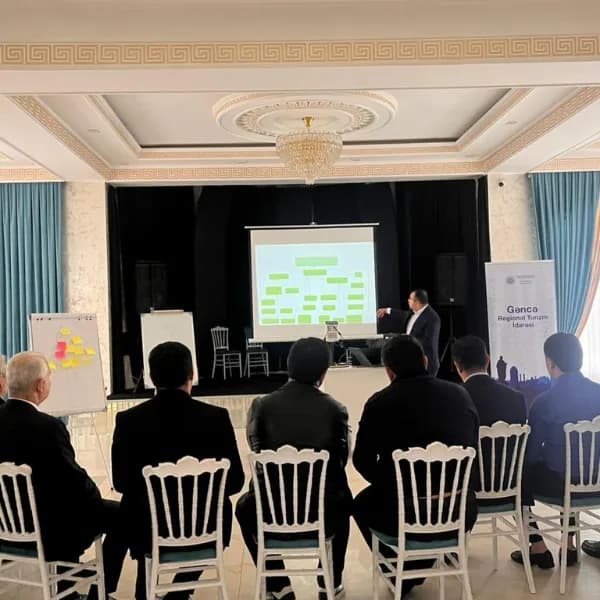
The value of a training programme lies in what participants do afterwards, not in the room. To get there, the logistics have to work first: the trainer arrives on time, participants are invited and registered, and the room, screen and sound are ready. When the programme repeats in several cities, that work is done again in each one. Vantage Events organises training, seminar and networking programmes for government bodies and organisations. In November 2025 we delivered 8 training and networking events in 4 cities over 9 days for the Ganja Regional Tourism Office, and a three-day programme in Gusar for the Quba Regional Tourism Office.
One programme, several cities
In a multi-city training series the content stays the same while the logistics change from city to city: venue, participant list, transport, accommodation and local partners. In the Ganja series we ran the same programme in four cities and prepared a separate logistics plan for each. Participants were local tourism businesses, entrepreneurs and sector representatives.
The biggest risk in such a series is the schedule. The trainer's move from one city to the next, equipment transport and room preparation are written down day by day. If something slips, it shows up in the next city's schedule in advance and the local partner is told in time.
Training and networking in one agenda
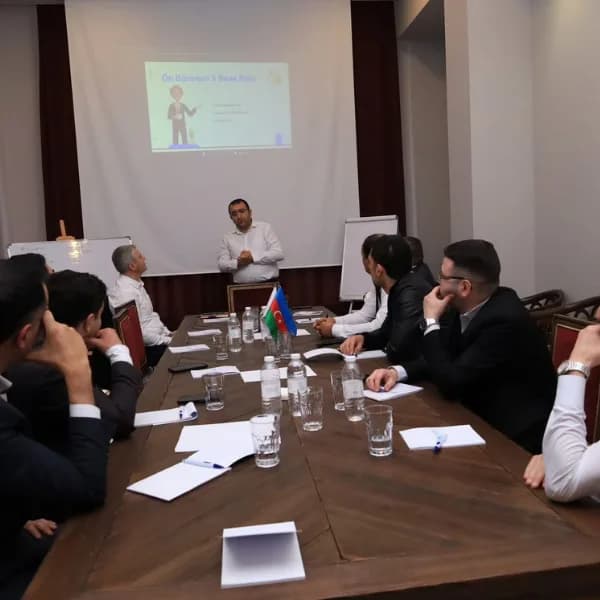
Our regional programmes combine training sessions with networking meetings. Over three days in Gusar the programme worked on professional skills, service quality and cooperation between regional tourism players. Agenda design, trainer coordination, participant management and facilitation of the networking sessions sat with our team.
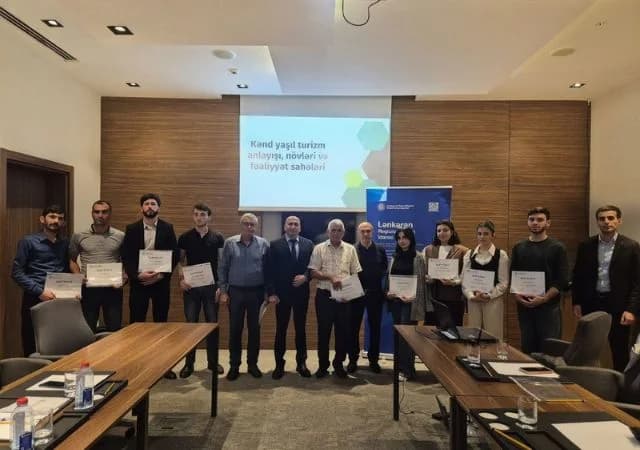
Sometimes networking becomes a format of its own. For the Lankaran and Baku–Absheron regional tourism offices we organised B2B events that matched agritourism farms with tourism companies. At such events participant matching and the meeting schedule matter as much as a training agenda.
Registration and participant management
Participant management starts with the invitation list. Who was invited, who confirmed and who attended: these three numbers are kept separately for every city and every day. The registration desk opens before the session, the participant list is collected with signatures and sent to the client at the end of the day.
In a multi-day programme we also record which sessions each participant attended, because certificates or reports may depend on it. In the regions some participants travel from neighbouring districts, so transport and arrival times are part of the registration plan too.
Documents for institutional and donor reporting
Training programmes are often commissioned by government bodies, international organisations or donor projects. For them the documents matter as much as the event: participant lists, registration figures, photos and video, planned and actual costs. We hand these over in one package after the event, so the client can send it straight into an internal report or to a donor.
The technical side should stay simple too. Screens, sound and microphones for the seminar room come from our own inventory, and the crew brings the equipment from Baku. The limits of a regional venue do not limit the programme.
What's included
- 01Programme and agenda design
- 02Trainer and speaker coordination
- 03Participant invitations, registration and lists
- 04Multi-city logistics: venue, transport, accommodation
- 05Screens, sound and microphones from our own inventory
- 06Facilitation of networking and B2B sessions
- 07Catering and coffee breaks
- 08Photography, video and a final report
How we work
Five steps. Each one ends in a document, so the client can see what is ready at every stage. The word methodology usually stays on a slide. Here each step has an owner, a deadline and an approver written down in advance. As events grow, the steps stay the same and only the documents get thicker.
- 01
Brief and objective
We write down who should do what after the event. The measure of success comes from here, not later.
- 02
Concept and programme
Format, narrative, guest journey and a minute-by-minute programme.
- 03
Drawings and clearance
Stage plan, rigging plan, load calculation. The venue's technical department signs it.
- 04
Build and delivery
The crew works to the drawing. On the day the operating crew stays in the room.
- 05
Derig and report
The venue is handed back. The report sets what was planned beside what happened, cost included.
Technical base
The technical base of the event is ours and does not depend on a rental chain. Our own team produces the drawings. Since 2023 we have delivered 17 projects, and our clients include 15 government and international institutions.
- 1,000 m²
- LED screens
- 920
- lighting fixtures
- 1,200 m
- TÜV-certified truss
- 186
- PA units
- 249
- microphones
- 1,000+
- guests at our largest event
Frequently asked questions
Which cities have you run training in?
Besides Baku we have worked in Ganja, Gusar, Lankaran and other cities, ten in total. The series for the Ganja Regional Tourism Office covered 4 cities. Crew and equipment leave from Baku, and we plan local logistics.
Who chooses the trainers?
The training content and trainers are agreed with the client. Our job is trainer coordination, the agenda, participants and logistics: who, where, when and with what equipment.
How long a programme can you run?
From a one-day seminar to a multi-day series. The Gusar programme lasted three days, and the Ganja series consisted of 8 events over 9 days. As the number of days grows, accommodation, transport and the trainer schedule are planned separately.
Can networking or B2B meetings be added to training?
Yes. In Gusar and Ganja the training sessions ran together with networking meetings. In Lankaran we matched agritourism farms with tourism companies in a separate B2B format.
Do you also run one-day seminars or corporate training in Baku?
Yes. The scale differs, but the work is the same: venue, agenda, registration, screens and sound, catering and a final report. We delivered the agritourism B2B meetings for the Baku–Absheron Regional Tourism Office in a single day. For a company's in-house training we work the same way: you provide the content and we run the rest of the organisation.
What drives the cost of a training programme?
The number of cities and days, the number of participants, trainer logistics and technical requirements. Within one working day of receiving your brief we send an itemised budget.
What do we receive after the programme?
The participant list and registration figures, photos and video, and a final report that sets planned and actual costs side by side. The package can go straight into an internal report or to a donor.
Let's discuss your event
A brief can be one paragraph: what the event is, the date, the number of guests and which part you need from us. We reply within one working day with a technical plan and a budget.